
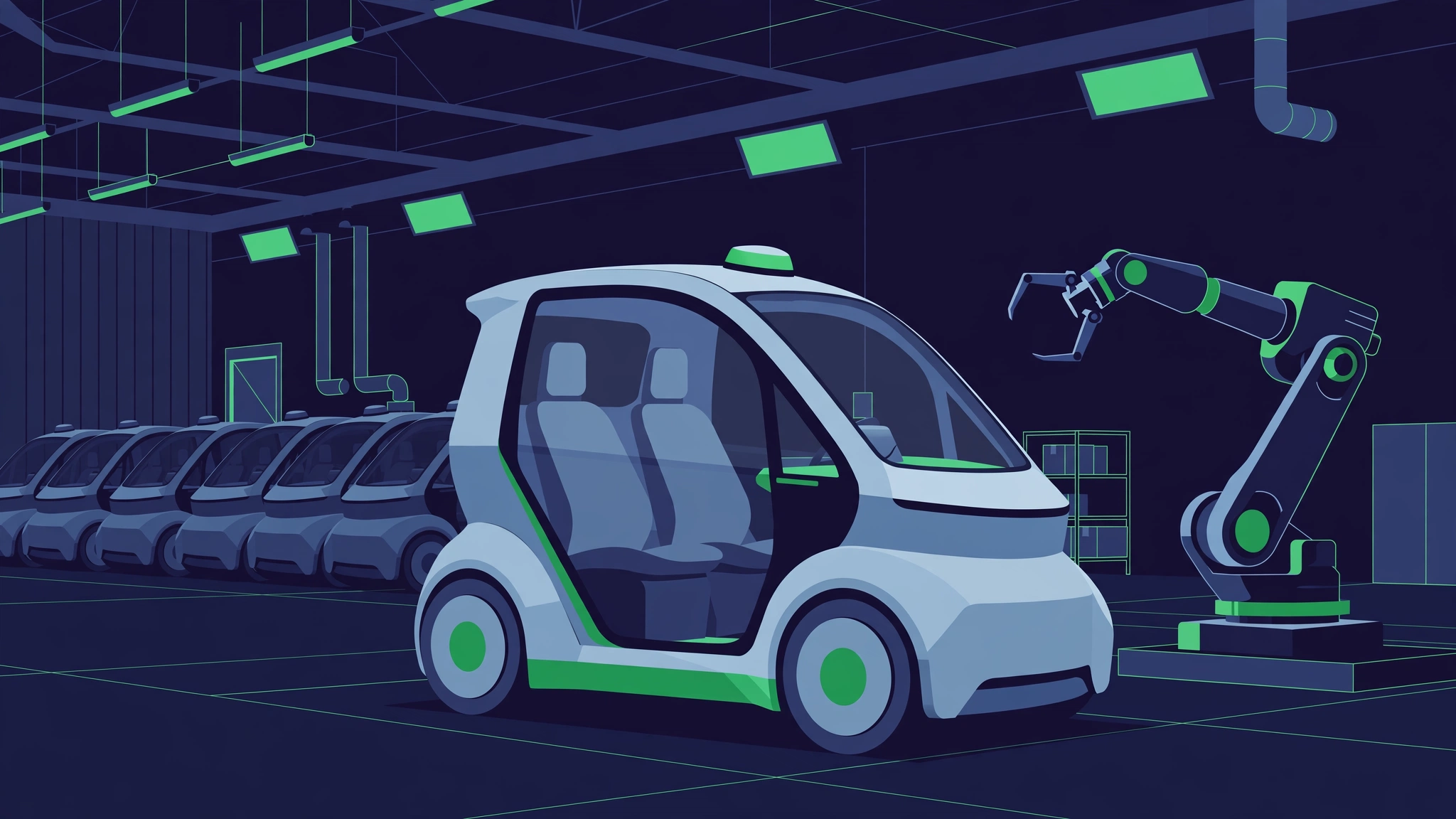
Tesla will invest €3 billion (US$3.3 billion) in its German gigafactory to build its driverless Cybercab robotaxi, the company said on Monday, 16 November. The planned additional production facility in Gruenheide, on the outskirts of Berlin, could make the site Germany’s largest car plant by capacity, overtaking Volkswagen’s Wolfsburg headquarters.
Tesla aims to produce up to 1 million Cybercabs a year at Gruenheide, the company said in a statement to Reuters, although the model has yet to be sold anywhere at scale commercially. Construction is scheduled to begin in the first half of 2027, with production set to start in 2029. Tesla said it would submit a building permit application before the end of the year, and that several hundred new workers would be sought for the first step of construction and production planning.
The investment runs against the trend among Tesla’s German rivals: Volkswagen, Mercedes-Benz and BMW are all cutting jobs and considering plant closures as Chinese competition grows. Tesla has emerged as one of the few growth stories in German car manufacturing. In recent months it has ramped up production of its Model Y SUV at Gruenheide and hired more than 2,000 new employees, and it aims to launch battery cell production there from the middle of next year.
The Cybercab is a two-seat vehicle with no steering wheel or pedals. Tesla has started inviting select customers to buy one for personal use at $29,990, with a mandatory $299 monthly subscription for operation and deliveries targeted for December 2026. Cybercab rides have already expanded to Dallas after launching in Austin in September.
Tesla will wind down Cybertruck production at its Austin factory in Texas at the end of summer 2027, chief executive Elon Musk said, to make way for more Cybercabs. The shift shows how far Tesla’s focus has moved from selling cars to selling autonomous transport.
Questions remain. Automotive analyst Matthias Schmidt said Germany should ask how much of the investment will result in sustainable, long-term employment, and how much will be automated, low-labour work. Tesla has also faced environmental protests at Gruenheide and repeated clashes with Germany’s IG Metall union.
What it means
Tesla is betting its European future on robotaxis, not on conventional cars. If the Gruenheide expansion delivers, Germany gets its biggest car plant and a front-row seat in autonomous driving. If Cybercab demand disappoints, the company will have built vast capacity for a vehicle that has yet to prove itself at scale.
Sources:
- Channel NewsAsia, “Tesla plans US$3.3 billion Cybercab boost for Germany’s troubled auto sector”, 17 November 2026 — https://www.channelnewsasia.com/world/tesla-plans-us33-billion-cybercab-boost-germanys-troubled-auto-sector-6556696
- Teslarati, “Elon Musk reveals Tesla’s next vehicle without a steering wheel”, 19 November 2026 — https://www.teslarati.com/elon-musk-tesla-model-yl-no-steering-wheel-robotaxi/